

Hello! This is Suseong Hana ENT Clinic, where clear breathing and crisp sounds begin. 😊
Have you ever had a nose job but found that breathing actually became more difficult afterward?
Or perhaps your nose became crooked after an injury, or you’ve been experiencing repeated nasal congestion and sought medical help. In these cases, cosmetic surgery that only focuses on appearance may not be sufficient. Often, nasal reconstruction surgery is needed to restore both the structure and function of the nose.
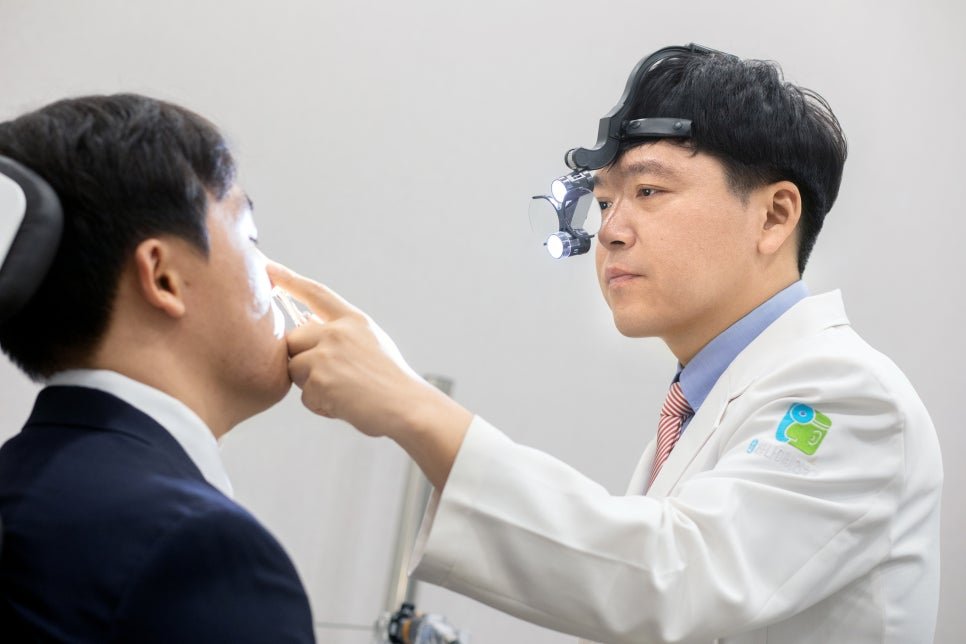
When Nasal Reconstruction Surgery Is Needed
The nose, located at the center of the face, is important not only for appearance but, more importantly, for breathing function. Many patients visiting ENT clinics in Daegu report that after previous nasal surgery, one side of their nose often feels blocked, or that worsening rhinitis makes breathing difficult.
When the internal nasal structure is compromised—due to collapse, adhesions, or cartilage damage—simply correcting the external appearance is not enough. In such cases, nasal reconstruction surgery is necessary to restore both function and form.
Diagnosis Comes First
When considering nasal reconstruction surgery, it is essential to first have an accurate assessment of your current condition at an ENT clinic in Daegu.
Using nasal endoscopy and CT scans, we carefully evaluate structural abnormalities, including the degree of septal deviation and the condition of the cartilage and mucosa.
Many patients initially assume they have simple nasal congestion, but detailed examinations often reveal that the internal structure of the nose has actually collapsed.

Different from Cosmetic-Only Surgery
Nasal reconstruction surgery is not simply about replacing implants. It restores the internal nasal structure and improves airflow to recover proper function. When necessary, the procedure may use the patient’s own tissue—such as septal cartilage, ear cartilage, or rib cartilage—to reinforce the structure.
Additionally, most surgeries are performed endoscopically through the inside of the nose, without any external incisions, so there is minimal concern about visible scars.
Consider Surgery If You Have These Symptoms
Patients who may require nasal reconstruction surgery often experience one or more of the following:
✔️ Worsened nasal congestion after previous surgery
✔️ A crooked or collapsed nose due to trauma
✔️ Difficulty breathing through one side of the nose or frequent mouth breathing during sleep
✔️ Recurrent rhinitis or sinusitis that does not improve with treatment
In such cases, simply using medication is often insufficient. Correcting the underlying nasal structure is necessary to achieve real improvement.

Function and Appearance at the Same Time?
Are you hoping to improve the appearance of your nose while undergoing nasal reconstruction surgery? In fact, the septal cartilage obtained during the procedure can be used to enhance the nasal tip or bridge.
Since it is your own tissue, there is minimal risk of complications, and it allows for a more natural and firm nasal shape. While restoring function is the top priority, considering aesthetic improvements at the same time is an option if you are undergoing surgery.
What Truly Matters Is an Accurate Diagnosis
Nasal reconstruction surgery is not just about improving the external appearance. It is a function-focused procedure that restores the internal structure so you can breathe comfortably.
For a successful surgery, it is crucial to have an ENT specialist with the experience and expertise to accurately understand and handle the nasal structures. If you are considering ENT treatment in Daegu, make sure to choose a clinic where a thorough structural diagnosis is performed first.
When it comes to restoring both a collapsed structure and lost function, it is only natural to approach the procedure with careful consideration.
This post was written directly by a physician in compliance with Article 56, Paragraph 1 of the Medical Service Act. All procedures carry the possibility of side effects such as bruising, swelling, inflammation, or burns. Please consult with medical staff before undergoing any treatment.