

Hello, this is Suseong Hanaro ENT Clinic, the start of clear breathing and bright voices!
Common nasal symptoms such as congestion or a runny nose are often dismissed as a simple cold.
But if these symptoms persist for several weeks or are accompanied by pain, reduced sense of smell, or other discomforts, it may not be just a cold—it could indicate sinusitis.
In particular, if you experience facial pain, headaches, or postnasal drip, a more accurate diagnosis is essential.
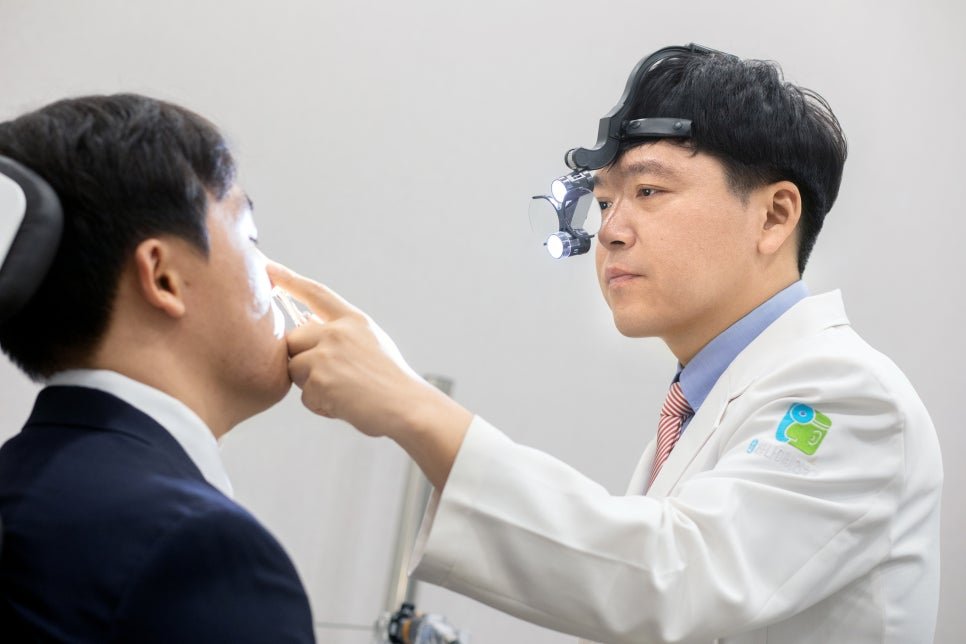
What is sinusitis?
Sinusitis, commonly referred to as a “sinus infection,” occurs when inflammation develops in the sinus cavities—the air-filled spaces within the bones around the nose—and pus or mucus accumulates.
The sinuses are located in the forehead, cheekbones, and between the eyes, and in healthy individuals, these spaces are normally filled with air.
However, when an infection or allergic reaction causes mucus buildup and inflammation, the location of these cavities can lead not only to nasal congestion but also facial pain and headaches.
In many cases, sinusitis in Daegu occurs as a complication following a cold. So if your cold seems to have cleared but you still experience facial heaviness or persistent nasal blockage, it may not be a lingering cold but sinusitis that requires attention.
Signs That May Indicate Sinusitis
Sinusitis can be acute or chronic, lasting for several months in some cases.
Typical symptoms include persistent nasal congestion, yellowish nasal discharge, and facial pressure or pain.
Other signs may include headaches, postnasal drip, snoring, mouth breathing during sleep, reduced sense of smell, and decreased concentration. These may also suggest sinusitis in Daegu.
In particular, if your symptoms worsen in the afternoon or if you feel facial heaviness when bending your head forward, it is important to visit an ENT clinic to assess your condition and receive prompt treatment for sinusitis.
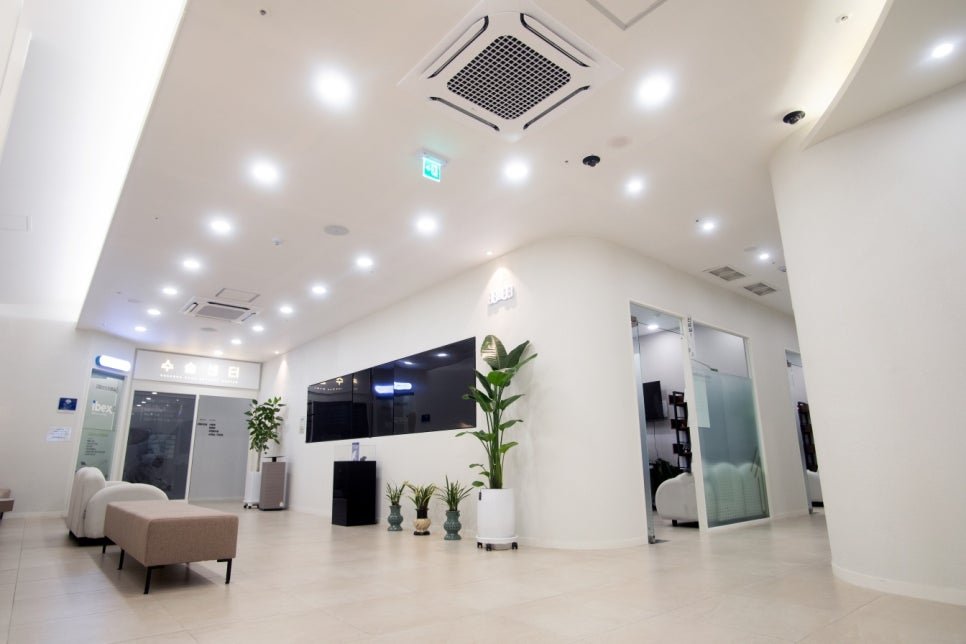
How Is an Accurate Diagnosis Made?
Diagnosing sinusitis in Daegu cannot always be done through a simple outpatient examination. It is recommended to visit an ENT clinic for a nasal endoscopy along with a sinus CT scan to precisely evaluate the extent of inflammation, the presence of pus, and whether the sinus openings are blocked.
A CT scan allows doctors to determine which sinuses are affected, how thick the mucosa has become, and whether the natural drainage pathways are obstructed.
Without an accurate diagnosis, medication may be ineffective, and the inflammation can recur. Patients with symptoms are advised to undergo evaluation early, as treatment is generally more effective at the initial stage. However, if the condition becomes chronic, medication alone may not produce significant improvement, so prompt treatment is strongly recommended.
What Are the Treatment Options for Sinusitis in Daegu?
The treatment approach depends on the duration of symptoms and the extent of inflammation.
For acute sinusitis, treatments typically include antibiotics, steroid nasal sprays, and nasal irrigation. With appropriate care, symptoms can improve significantly within 2–3 weeks.
However, for chronic sinusitis lasting over three months, medication alone may have limited effectiveness. In such cases, surgical intervention is often recommended.
The most common procedure is Functional Endoscopic Sinus Surgery (FESS). This involves inserting an endoscope through the nasal cavity to open blocked sinus passages and remove pus and diseased mucosa.
FESS is performed without external incisions, is precisely targeted and function-focused, allowing for faster recovery and a lower risk of recurrence.
It is important to assess your condition and receive treatment tailored to your symptoms to improve your current state.
Treatment Should Begin at a Specialized ENT Clinic
Unlike a simple cold, sinusitis can involve both structural issues and inflammation, making it difficult to improve with standard treatments alone.
If you experience chronic nasal congestion, facial pain, or reduced sense of smell, it’s important to identify the underlying cause accurately and begin the appropriate treatment rather than relying solely on medication.
Sinusitis is a condition that can be effectively treated and significantly improved when properly diagnosed and managed.
If your nose constantly feels uncomfortable, it’s time to take a closer look inside your nasal passages. If sinusitis is suspected, visiting a specialized ENT clinic will guide you toward a fast and reliable recovery.
This post was written directly by a physician in compliance with Article 56, Paragraph 1 of the Medical Service Act. All procedures carry the possibility of side effects such as bruising, swelling, inflammation, or burns. Please consult with medical staff before undergoing any treatment.