

Hello! This is Suseong Hana ENT Clinic, where clear breathing and crisp sounds begin.
Many patients come to us saying things like, “Even after taking medication for a long time, my nose still feels blocked,” or “My congestion and runny nose just won’t go away.”
Although rhinitis is a common condition, its impact on daily life should not be underestimated. Constant nasal blockage can make breathing difficult throughout the day, force you to sleep with your mouth open, and even affect your sense of smell.
Many people assume that rhinitis is a condition that can be managed with medication alone. However, when symptoms do not respond to drugs, conservative treatment may no longer be sufficient.
In particular, for chronic rhinitis caused by structural issues, surgical treatment can provide a more effective solution.
If you are reading this and have already felt the limits of medication, it may be time to consider rhinitis surgery in Beomeo-dong.

What If Rhinitis Symptoms Persist?
Rhinitis is a condition in which the nasal mucosa becomes repeatedly inflamed due to external irritants or allergic reactions. The problem arises when this inflammation becomes chronic and the mucosa thickens.
In particular, when the nasal tissue called the inferior turbinate becomes enlarged, the nasal passage narrows, preventing air from flowing freely.
In such cases, no matter how many antihistamines or nasal sprays are used, the relief is usually temporary and significant improvement is difficult to achieve.
Moreover, the thickened mucosa can make it hard for medications to reach the affected area, limiting their effectiveness.
When structural abnormalities like this are present, surgical intervention may be necessary beyond simple medication.
Consider Surgery If These Symptoms Persist
Not all cases of rhinitis require surgery. However, if you experience the following, it may indicate structural issues, and a detailed examination is recommended.
If your nose is blocked for more than half of the day, or if runny nose and sneezing persist despite medication, it is important to check for structural abnormalities.
Additionally, if you frequently sleep with your mouth open, have difficulty breathing through your nose during sleep or exercise, experience a reduced sense of smell, or suffer frequent headaches, surgical consideration becomes even more relevant.
When these symptoms persist, they can significantly reduce quality of life and lead to secondary issues such as chronic fatigue, decreased concentration, and poor sleep quality.

Rhinitis Surgery in Beomeo-dong: How Is It Performed?
Rhinitis surgery in Beomeo-dong is not a single, uniform procedure but is tailored to each patient’s condition.
The most common procedure is inferior turbinate reduction.
This involves removing a portion of the enlarged nasal mucosa to widen the nasal passages. By directly reducing the tissue, airflow is improved, addressing the underlying cause of nasal congestion and providing long-term relief.
If the patient also has a deviated septum, septoplasty may be considered.
This procedure is often performed when the septum is crooked, causing one nostril to remain consistently blocked. By correcting the structural alignment, septoplasty helps restore proper airflow to both sides of the nose.
In this way, rhinitis surgery in Beomeo-dong goes beyond simply reducing the mucosa—it takes a comprehensive approach, tailored to each patient’s nasal structure and symptoms.
It is important to first visit an ENT clinic for an accurate evaluation and then proceed with the surgery that best fits your condition.
Recovery and Effectiveness After Surgery
Many patients worry about surgery because they wonder, “How much will it interfere with my daily life?” or “Will there be significant pain or bleeding?”
However, rhinitis surgery in Beomeo-dong is mostly performed under local anesthesia or sedation, rather than general anesthesia, allowing for same-day surgery and discharge without hospitalization.
The most important benefit is that breathing becomes much easier after the procedure.
Many patients say, “I never realized how refreshing it feels to have my nose open.”
If you are experiencing difficulty breathing, it is wise not to hesitate—undergoing surgery sooner rather than later can provide significant improvement and relief.
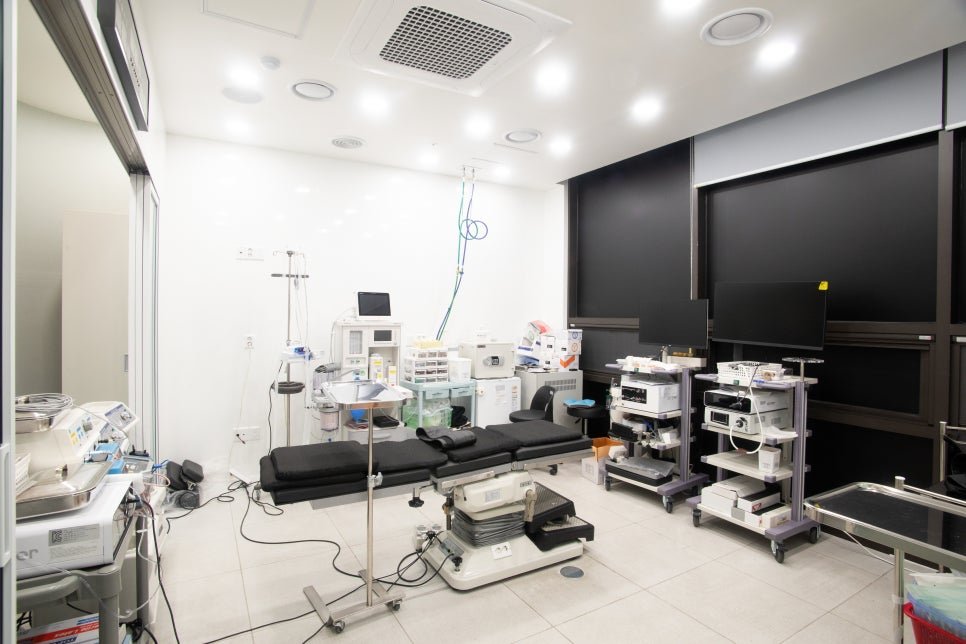
Consider Surgery When Medication Isn’t Enough
Nasal congestion and runny nose are not always simple cold symptoms—they may indicate a structural problem causing chronic rhinitis.
It is important to first visit an ENT clinic for a detailed evaluation, including endoscopic examination and CT scans, to accurately assess the condition of the nasal mucosa and underlying structures, and determine whether surgery is necessary.
Rather than merely suppressing symptoms with medication, addressing the root structural issues through surgery can provide a more effective, long-term solution for rhinitis.
This post was written directly by a physician in compliance with Article 56, Paragraph 1 of the Medical Service Act. All procedures carry the possibility of side effects such as bruising, swelling, inflammation, or burns. Please consult with medical staff before undergoing any treatment.